
Textile exports from India are expected to register a 25 per cent growth during this year, a senior textile ministry official said on Monday.

Currently, India imposes 30-45 per cent duty on textile products from Pakistan.

Over 65 Union ministers are likely to take oath, going by the visual of the meeting Modi held with his likely council of ministers.

As many as 37 ministers have been dropped from the government in Prime Minister Narendra Modi's third term and these include seven with cabinet rank -- prominent among them being Smriti Irani, Anurag Thakur and Narayan Rane.

The 44-year-old politician, who was among the final three contestants in the Labour Party's leadership contest against her boss in January 2020, has been serving in his shadow cabinet ever since.

In a move that could improve the weakening sentiment in the Indian textile industry, the government is set to sign a free trade agreement (FTA) with the European Union (EU) by the end of the current calendar year.
The government is likely to come up with export sops for the domestic textiles industry in the upcoming Budget, including a rise in duty drawback rates.
The Centre, in a stimulus package on December 7, provided an interest subvention of two per cent up to March 2009 for pre and post-shipment export credit for labour-intensive exports (textiles, leather, marine products) and SME sector.
Undeterred by the poor showing of textile exports after the dismantling of the quota system in January, the government has set a high target of 20 per cent growth to touch $50 billion annual exports by 2010.
Prime Minister Manmohan Singh has convened a meeting on Wednesday on bailing out the textile industry following the surge in input costs due to a sharp hike in the minimum support price of cotton in September.

Rising skills gap, falling exports, low productivity, rising debt and low foreign investment is jeopardising the target set for the textile and apparels sector
The government's estimate that 300,000 to 500,000 people will lose their jobs -- is well below the projections of industry lobby groups, which put the number at around 1 million. The textiles and garments industry is the second-largest employer in India after agriculture. It directly employs 35 million people and indirectly provides livelihood to about 88 million people.

The government on Wednesday said it is confident that textiles exports target of USD 33 billion for 2011-12 will be achieved as there is a good demand from markets like Japan and Latin America.

India's merchandise exports rose by 9.1 per cent to $38.13 billion in May even as the trade deficit widened to a seven-month high of $23.78 billion during the month, according to government data. Healthy growth in sectors, such as engineering, electronics, pharmaceuticals, textiles and plastics helped register growth in exports despite global economic uncertainties.

'I think some of us, like Mukesh Ambani, myself and those of us who head industrial units, ought to really focus on what we can really do to make the world a safer place, maybe 50 or 100 years from now.' 'For instance, how can we deal with climate change and global warming, right now?' 'The effects of it may not be felt now; in fact, we may pay a price for it today, but it will help the generations to follow.'
The central government has revised its guidelines for the textiles centre infrastructure development scheme by hiking the central assistance component to 100 per cent from 50 per cent to widen its scope and speed up implementation of the scheme.
The commerce ministry recently announced that it intends to switch over to a small negative list for trade with India by the end of February and to phase out this regime by the end of the year.
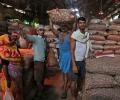
The wholesale price index-based inflation remained in the negative territory for the seventh straight month in October at (-) 0.52 per cent, on easing prices of food items. The WPI-based inflation rate has been in the negative zone since April and was at (-) 0.26 per cent in September, 2023. In October last year, WPI was at 8.67 per cent.

Any government support or incentive to help exporters deal with high freight and insurance costs is unlikely.

Closely watched by the world for any escalation, the Iran-Israel conflict is already showing early signs of stress for India Inc - longer deliveries, doubling freight rates, extended working capital cycles, and higher costs. For those yet to feel the heat, there is growing apprehension and nervousness over future developments, observed industry executives.
Finance Minister P Chidambaram is expected to extend a relief package for leather and textile exporters, who are hit by the rupee appreciation, as demanded by the commerce ministry.

With an aim of boosting manufacturing and exports amid sharp fall in the rupee, the government has decided to take a slew of steps, including enhancing steel production capacity to 300 million tonnes and raising textile exports by 30 per cent this year.
India's textiles exports registered a modest increase of nine per cent during April-October this fiscal, despite an impressive 43 per cent in jute and 12 per cent increase in ready-made garment exports.\n\n\n\n
According to initial estimates available with the commerce ministry, these sectors, which constitute a third of India's export basket, have posted a dip of 18-54 per cent in December 2008. Exporters claim they do not have orders beyond January 2009, adding that the situation could lead to 10 million job losses if things did not improve.

The wholesale price index-based inflation remained in the negative territory for the sixth straight month in September at (-)0.26 per cent, on easing prices of food articles. The WPI-based inflation rate has been in the negative since April and was (-)0.52 per cent in August. In September last year, it was 10.55 per cent.

'The package will help in realising the true potential of employment generation in the textile and apparel sector.'

FinMin urges reduction not be weighed against Budget estimates.

Prime Minister Narendra Modi reached out to the attendees of the Kashi Tamil Sangamam in Varanasi with his speech being translated for the audience in real-time using artificial intelligence.

In a big push to the production-linked incentive (PLI) scheme, the government has nearly doubled (increase of 81 per cent) the allocation in five key industry segments from Rs 8,405 crore in the Revised Estimate of FY24 to Rs 15,198 crore in the Interim Budget for FY25. The segments cover over eight PLI schemes, including mobile phones, IT hardware, pharma (PLIs for medical devices, intermediates and pharmaceuticals), food processing, telecom hardware and, auto and auto components. In FY24, DPIIT officials, however, said that the disbursements would be much higher at around Rs 11,000 crore than what has been budgeted for the year.
The wholesale price-based inflation rate declined to (-) 4.12 per cent in June on easing prices of food, fuel and manufactured items. The wholesale price index (WPI) based inflation in May was (-) 3.48 per cent. In June last year, it was 16.23 per cent.

Grant to help the industry clear its dues up to June 30. Under the scheme, the government provides 5 per cent subsidy to industries for modernisation and installation of new upgraded machinery. The fund would be transferred electronically to more than 121 financial institutions and will help 12,514 beneficiaries.
The commerce ministry is preparing a note for the Cabinet proposing further relief for the rupee-hit exporters, especially those in the job-oriented textiles and leather sectors. The package is likely to be cleared by Commerce Minister Kamal Nath on Tuesday before it goes to the Cabinet Committee on Economic Affairs later this week, he said.

The country's exports edged up 1 per cent to $38.45 billion in December 2023 while the trade deficit narrowed to a three-month low of $19.8 billion, official data released on Monday showed. Imports declined by 4.85 per cent to $58.25 billion in December last year due to a dip in crude oil shipments. The previous low in trade deficit - the difference between imports and exports - was recorded in September at $19.37 billion.
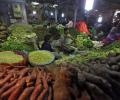
Wholesale price-based inflation remained in the negative territory for the fifth straight month in August at (-)0.52 per cent, but prices of food articles and fuel showed an uptick. The wholesale price index (WPI) based inflation rate has been in the negative since April and was (-)1.36 per cent in July. In August last year it was 12.48 per cent. Inflation in food articles remained in double digit at 10.60 per cent in August, lower than 14.25 per cent in July.
Textile exports from India grew 17.9 per cent in the first two months of this fiscal to touch Rs 13,352 crore (Rs 133.52 billion), according to an official.
Under pressure from textile industry for more concessions, government on Thursday announced more tax sops including raising of excise duty exemption limits for powerloom weavers and readymade garments.
 © 2026 Rediff.com - Advertise with us - Disclaimer - Privacy Policy - Sitemap - Feedback - About us - Terms of use - Grievances